Category: Market News & Macro

  • What’s Really Behind the Big Crypto Sell-Off in Late 2025

    What’s Really Behind the Big Crypto Sell-Off in Late 2025

    Bitcoin Sell-Off 2025: Why Crypto Is Crashing and What’s Really Driving the Move

    The current Bitcoin sell-off isn’t just a random crypto tantrum. It’s a full-scale unwind driven by slowing global growth, elevated real yields, leverage washouts, whale and institutional distribution, and a sharp turn in risk sentiment. In other words: this is what happens when macro finally cashes in on the excesses of a liquidity-fueled bull run.
    Market Recap: Bitcoin Sell-Off Goes From “Dip” to “Repricing”

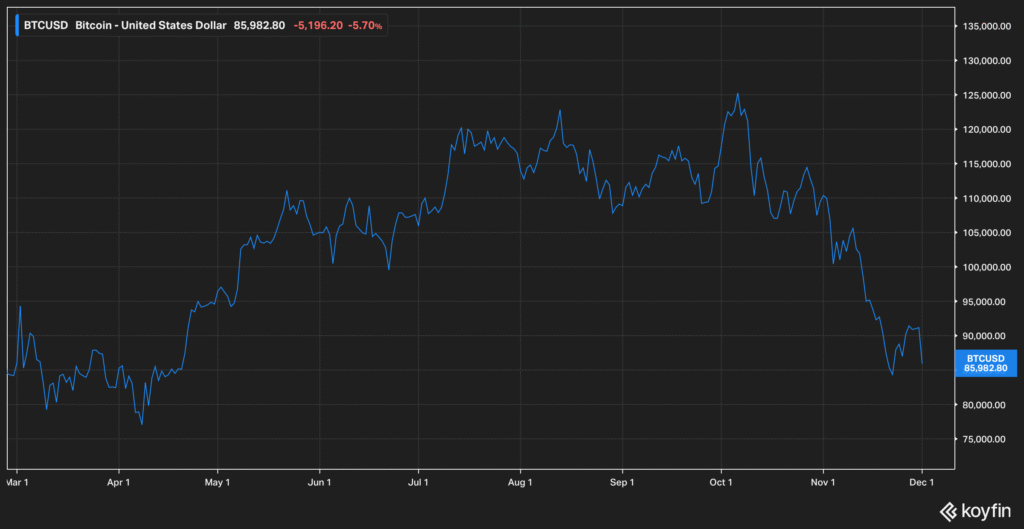
    After a strong run earlier in the year, Bitcoin rolled over and slid into a deep double-digit correction, dragging the rest of the crypto complex with it (Barron’s). The move hasn’t looked like normal noise — volatility spiked, liquidity thinned out, and depth on the bid side vanished right when sellers needed it most (Financial Times).

    That combination — thin liquidity, heavy selling, and high leverage — is classic “macro stress meets degen market structure.”

    Why the Bitcoin Sell-Off Is Happening: The Multi-Layered Drivers

    1. Macro Risk-Off & Slowing Global Growth Tighten the Noose

    Under the hood, global growth is slowing. A 2025 macro outlook shows weaker worldwide activity as trade frictions, softer demand, and elevated uncertainty weigh on output (Morgan Stanley).

    In the U.S., GDP forecasts for 2025 have been revised lower, with growth expected to cool further into 2026 as tariffs, tighter migration, and supply-chain frictions drag on productivity (EY Economic Outlook). Slower growth usually means weaker earnings, more cautious risk-taking, and a shift away from high-octane assets.

    Research suggests crypto is increasingly correlated with macro cycles: when growth expectations weaken, speculative inflows fall and risk premia rise (S&P Global). In that environment, Bitcoin transforms from “digital gold” into “the first thing you dump to raise cash.”

    2. Elevated Interest Rates & Real Yields Hit Non-Yielding Crypto

    Crypto’s biggest structural problem in 2025: it doesn’t pay you anything. With central banks keeping policy rates elevated and real yields rising, investors can finally earn a respectable return in safer assets. That dramatically raises the opportunity cost of holding volatile, non-yielding Bitcoin (Medium Research).

    Analyses of how macro policy feeds into crypto markets show that tighter monetary conditions and higher real yields suppress demand for speculative, duration-like assets (Gate Research). At the same time, work on interest rates and crypto pricing highlights that rate hikes and sticky inflation expectations tend to correspond with drawdowns in Bitcoin (CoinLedger Research).

    Translation: when you can get paid in Treasuries, the “number go up” narrative has to work a lot harder.

    3. Forced Liquidations & Leverage Unwinds Amplify the Fall

    Crypto doesn’t just go down; it cascades. Earlier in the cycle, a massive liquidation wave took out billions in leveraged long positions, revealing how fragile positioning had become (Financial Times). As spot prices rolled over again, a familiar loop kicked in:

    • Prices dip → margin calls hit leveraged longs.
    • Forced selling deepens the move.
    • More liquidations trigger as collateral values drop.

    Coverage of the recent correction points to a sharp spike in liquidations that helped turn an orderly pullback into a fast flush (Economic Times). In a macro environment already tilted toward risk-off, that leverage unwind hits even harder (Market Minute).

    4. Whale & Institutional De-Risking Adds Structural Sell Pressure

    On-chain data has flagged billions in BTC flowing onto major exchanges over a relatively short window — a pattern historically associated with whales preparing to sell into weakness (Economic Times). That supply matters when spot liquidity is shallow.

    At the same time, institutional investors now hold a much larger share of the crypto pie. Reports highlight that institutions and corporates with digital-asset treasuries have been trimming or offloading exposure as equity markets wobble and volatility rises (Financial Times). Analysis of the current crash argues that this cycle is more dangerous than prior bear markets precisely because institutional participation has turned Bitcoin into a mainstream risk asset (Business Insider).

    In other words, when big money hits “reduce risk,” Bitcoin is now in the crosshairs — not outside the system.

    5. Sentiment Fragility & the “Tinkerbell Effect” Reversal

    Deutsche Bank analysts recently described Bitcoin’s valuation as partly driven by a “Tinkerbell effect” — it holds value as long as enough people believe in the story. But that belief is fragile when macro shifts and price momentum breaks (MarketWatch).

    With global growth slowing and central banks staying restrictive, the vibe flipped from FOMO to “maybe I should not be 100x long digital rocks.” Research on macro–crypto linkage shows that when policy tightens and growth fears rise, risk appetite collapses across the board — and crypto, lacking cash flows or hard fundamentals, is often hit hardest (Gate Research).

    Why This Bitcoin Sell-Off Feels Different

    What makes this Bitcoin sell-off more dangerous is that it isn’t just a crypto-specific event. It’s happening alongside weaker growth, stubbornly high real yields, and broader risk-off behavior in global markets.

    • Global growth is decelerating, pushing investors toward safety (Morgan Stanley).
    • Real yields and policy rates are elevated, making yield-bearing assets much more attractive than non-yielding crypto (CoinLedger Research).
    • Leverage is amplifying downside as forced liquidations cascade through futures and perp markets (Market Minute).
    • Institutions and whales are net sellers, using BTC as a liquidity source and de-risking tool (Business Insider).
    • Crypto is increasingly macro-correlated, behaving more like a high-beta extension of risk assets than a hedge (S&P Global).

    Put simply: Bitcoin is no longer outside the system. It’s plugged into the same macro plumbing as everything else — and when that plumbing groans, it gets hit.

    What Traders Should Watch Now — Macro Is the New Technical

    • Growth data & revisions — GDP forecasts, PMIs, and earnings trends. Further downward revisions to growth tend to keep pressure on high-beta risk (EY Economic Outlook).
    • Yields & central bank expectations — sustained high real yields or hawkish surprises generally weigh on crypto valuations (CoinLedger Research).
    • Exchange inflows — spikes in BTC flowing to exchanges historically precede more selling (Economic Times).
    • Funding rates & open interest — persistent negative funding and collapsing OI suggest capitulation; a re-build in leverage tells you the next squeeze is loading (Market Minute).
    • Institutional flows & ETFs — outflows from crypto ETPs and institutional products are a clean proxy for big-money risk appetite (Financial Times).
    • Fear gauges & positioning — surveys and flow data show extreme fear levels, with some research suggesting the market may not yet have fully bottomed (AInvest).

    For live market context, it’s also worth tracking total crypto market cap and BTC dominance across major aggregators like CoinMarketCap.

    Trader Takeaways

    • This Bitcoin sell-off is macro-driven — slowing growth and high yields are not exactly “up only” fuel.
    • Leverage and whale flows are turning a macro repricing into a volatility event.
    • Institutional positioning now matters as much as retail sentiment, if not more.
    • Until macro eases — think lower real yields or improving growth — rallies are guilty until proven innocent.

    Final Takeaway

    The 2025 Bitcoin sell-off is what happens when a high-beta, non-yielding asset meets slowing growth, high real yields, and crowded positioning. Crypto is no longer a side quest to the macro story — it’s in the main plot. Until the growth outlook stabilizes or central banks soften their stance, volatility and air-pocket risk remain part of the trade.

    Disclaimer: This is not financial advice. Trading involves risk, and nothing in this post should be interpreted as a recommendation to buy or sell any security. Review full legal policy -> Here

  • Flows Check: The $88B AI War Chest, Biotech Washout, and What Today’s Tape Was Really Saying

    Flows Check: The $88B AI War Chest, Biotech Washout, and What Today’s Tape Was Really Saying

    TradeDeskDaily Update

    This post breaks down the AI capex supercycle that is reshaping markets right now: Big Tech’s $88B debt war chest, the biotech washout, the squeeze in AI infrastructure names, and what today’s flows are really signaling under the surface.

    On the surface it looked like chaos: Big Tech tapping the bond market for almost $90B, Amazon dropping a $50B bombshell on federal AI infrastructure, Google ripping double digits, Broadcom going parabolic, Novo Nordisk getting torched, China tech squeezing, and credit card delinquencies quietly grinding higher in the background. Underneath the noise, there’s a simple theme: we’re in an AI capex supercycle funded by the debt markets, and something has to be sold to pay for it.

    Think of this post as the “Wall Street edit” of today’s flows: what really moved, why it moved, and how the pieces fit together.


    1. Big Tech’s $88B Debt Binge: Fuel for the AI Capex Supercycle

    Headlines framed it as “Big Tech floods the bond market with nearly $90B in new debt.” That sounds scary until you look at what the money is actually buying. Alphabet, Meta, Amazon, and Oracle have all tapped credit markets in recent weeks, with combined issuance approaching $90B, and strategists expect net tech debt issuance to hit roughly $100B next year as AI capex ramps.

    This isn’t a distressed balance-sheet patch job. It’s a deliberate decision to finance:

    • AI data centers (power + land + cooling)
    • Custom silicon (TPUs, Trainium-style chips, assorted ASICs)
    • Network and storage upgrades to handle model scale

    Forecasts now put AI-related capex at more than $400B in 2025 and potentially $600B by 2027, after analysts repeatedly underestimated how aggressively hyperscalers would spend. The debt being raised now is the ammunition for that arms race.

    So when you see “$88B in leverage,” don’t picture a late-cycle LBO. Picture a multi-trillion-dollar AI infrastructure grid being pre-funded with cheap(ish) long-term capital. Welcome to the AI Capex Supercycle


    2. Amazon’s GovCloud Bet and the AI Capex Supercycle

    The single most important headline today might end up being an AWS press release that most retail never read.

    Amazon announced plans to invest up to $50B to build roughly 1.3 gigawatts of AI and high-performance compute capacity dedicated to U.S. government customers across its AWS Top Secret, Secret, and GovCloud regions. That’s not marketing fluff. It’s concrete, power, land, and racks locked in against long-duration federal workloads in cybersecurity, energy, healthcare, and national security.

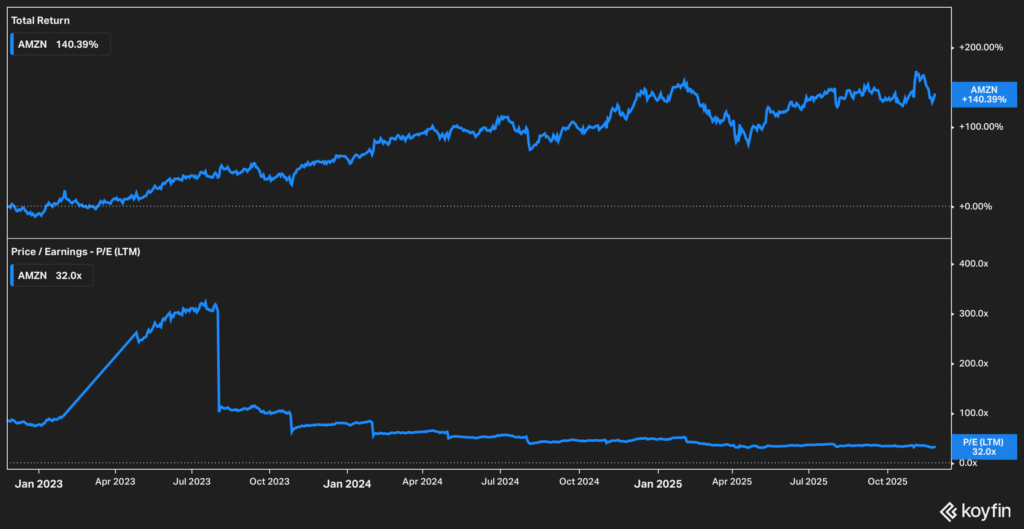
    Layer that on top of Amazon’s existing capex trajectory and the picture gets wild. In Q3 2025, Amazon’s capex jumped 55% YoY to $35.1B, and the company lifted its full-year 2025 guidance to about $125B — more than half of projected operating cash flow and roughly 17% of revenue.

    From a TradeDeskDaily perspective, this is huge:

    • It effectively underwrites a chunk of AWS capex with federal contracts.
    • It creates a floor for AI infrastructure utilization across GovCloud.
    • It pushes Amazon deeper into “systemically important infrastructure” territory, not just e-commerce + ads.

    That’s why you’re seeing accumulation in the $200s: the market is treating this as a multi-year, government-backed revenue stream, not a one-off AI press release.


    3. Google’s Gemini 3 Moment: Meme Trade or Institutional Re-Rating?

    Retail saw the WallStreetBets screenshots. TradeDeskDaily saw something different.

    Alphabet stock has been on a tear in 2025, with shares up more than 50% year-to-date and repeatedly printing new all-time highs. The latest leg came as Google formally rolled out Gemini 3, its next-gen model, with strong early reviews and a visible push to position TPU hardware as a credible alternative to Nvidia’s GPU stack.

    On launch, the stock rallied as much as 6–7% intraday, its biggest move in months, and call option volume spiked above typical full-day averages before lunch.

    • Traders were selling downside puts to finance upside calls.
    • Skew flattened as traders reached for exposure rather than hedges.
    • Analysts framed the move as a “re-rating of Google’s AI infrastructure story,” not just chatbots and search.

    Add in reports that Google is pushing TPUs harder into third-party data centers and structuring large-scale AI deals with partners like Anthropic, and it’s clear: this is an institutional rotation into Google as an AI platform, not just a meme pump.


    4. Broadcom: The Hidden Winner Riding Google’s Wake

    If Google is the front-end story, Broadcom is the back-end story.

    Broadcom jumped double-digits as the market finally internalized just how closely tied its fortunes are to hyperscaler AI infrastructure. The company has been Google’s primary partner on custom AI ASICs for TPUs, and analysts now estimate that well over half of Broadcom’s AI compute revenue is anchored to that relationship.

    Big picture:

    • Broadcom sits at the center of a second, quieter arms race: custom silicon vs. Nvidia’s general-purpose GPUs.
    • All five major hyperscalers (Amazon, Microsoft, Google, Meta, Oracle) rely on Broadcom somewhere in their custom chip pipelines.
    • As AI capex supercycle estimates have been revised up from $250B to more than $400B for 2025, Broadcom’s opportunity set has ballooned with them.

    Today’s $AVGO action was a classic “sympathy squeeze”: Google rips, options go bid, and anything levered to hyperscaler AI infrastructure gets dragged higher. Great to trade — just don’t confuse a one-day melt-up with a risk-free long. Lock in some of that lotto premium.


    5. Biotech Takes the Pain: Novo Nordisk’s EVOKE Faceplant

    While AI names were levitating, biotech quietly took a beating — led by Novo Nordisk.

    Novo reported topline results from its EVOKE and EVOKE+ phase 3 trials testing an oral form of semaglutide in early Alzheimer’s disease. The drug failed to meet the primary endpoint: it did not significantly slow cognitive decline versus placebo, even though some biomarkers moved in the right direction.

    The market reaction was brutal. Shares dropped around 10–12% intraday, wiping out a chunk of the “semaglutide cures everything” premium that had been priced in after runaway success in obesity and diabetes.

    Key implications:

    • The Alzheimer’s TAM is now much more clearly Lilly + Biogen territory, with their amyloid-targeting drugs holding the lead.
    • Novo’s GLP-1 franchise is still a monster, but the market will demand proof before paying for non-metabolic indications.
    • Biotech as a funding source: in a world where the AI Capex supercycle needs capital, speculative healthcare often becomes the ATM.

    For now, $NVO goes back into the “show me” bucket until the next pipeline readout. Capital is rotating into names like Eli Lilly and select med-tech instead.


    6. Under the Hood: Consumers Are Quietly Stressing Out

    Zooming out from single names, today’s flows sit on top of a more uncomfortable macro story: corporate balance sheets are expanding while household balance sheets are fraying.

    The New York Fed’s latest Household Debt and Credit report shows:

    • Total household debt at a new record, with balances rising across mortgages, auto loans, and credit cards.
    • About 4.5% of total debt now in some stage of delinquency, with transitions into serious delinquency increasing across most categories.
    • Credit card balances above $1.23T, and delinquency rates elevated relative to pre-COVID norms.

    Put differently: Big Tech is issuing bonds to build data centers, while households are riding higher interest costs on revolving balances. That divergence tends to resolve through volatility, not a gentle glide path.

    Practical takeaway: if you’re long AI/high-beta tech, consider pairing with consumer staples, quality credit, or even short exposure to subprime-sensitive consumer names as a hedge. (not financial advice, review our legal policy -> here)


    7. China Corner: Alibaba’s Qwen Pop Is Still a “Rent, Don’t Own” Trade

    China tech finally caught a bid, with $BABA up on strong early data from its revamped Qwen AI app. The app crossed more than 10 million downloads within a week of relaunch, signalling that Alibaba’s home-grown model is gaining real consumer traction.

    That’s good news for sentiment, but flows tell a different story:

    • Most of the move looked like short covering + momentum chasing, not fresh institutional capital.
    • Foreign investor positioning in China remains light, with little evidence of sustained ETF or direct inflows.
    • The trade remains highly correlated to Nasdaq risk sentiment; when U.S. tech cools, China tech tends to fade right alongside it.

    Until we see persistent foreign buying and more policy clarity, China tech — including Alibaba — remains a “rent, don’t marry” trade during this AI Capex supercycle.


    8. The AI Capex Supercycle: Who’s Funding Whom?

    Tie all of this together and the flows picture gets very clear:

    • Debt markets are funding the AI Capex Supercycle for Alphabet, Amazon, Meta, Oracle and friends.
    • Equity markets are rewarding infrastructure winners like Nvidia and Broadcom with premium multiples and fresh capital.
    • Funding sources include biotech, small-cap growth, and increasingly the stretched corners of consumer and China tech.

    This is the AI capex supercycle in real time: winners are being over-funded to accelerate, while structurally weaker sectors are sold to pay the bill.


    9. How to Trade This Tape (Not Advice, Just a Framework)

    Nothing here is financial advice, but if you’re trying to build a coherent playbook out of today’s madness, a few principles stand out:

    • Lean into structural AI winners (Amazon, Google, Nvidia, Broadcom) on pullbacks, not breakouts.
    • Respect crowding risk: the more obvious the story, the more violent the drawdowns when macro or positioning flips.
    • Use pairs and hedges: long AI infrastructure vs. short over-levered consumer or speculative biotech can make the macro divergence work for you.
    • In China tech, rent, don’t own until flows and policy both turn sustainably.

    Most importantly: separate narrative from flows. The headlines push one story; the tape usually tells another.

    (not in any way financial advice, always do your own due diligence. check our policy)


    10. Your Turn: What Did You Trade Today?

    We’ll keep updating this framework on Trade Desk Daily as new earnings, AI capex numbers, and macro data hit the tape. If you found this breakdown helpful:

    • Drop a comment with your best trade of the day: did you ride the $GOOGL wave, catch the $AVGO sympathy squeeze, fade $NVO, or sit in cash?
    • Share this post with someone who still thinks the $88B bond headlines were about “reckless leverage.”
    • Follow us on X – @TradeDeskDaily !!!

    The AI Capex supercycle isn’t over. It just keeps finding new ways to reprice everything else.

    Sources

  • Nvidia Earnings Analysis Nov 25′: Absolutely Nuclear Numbers, So Why Did the Stock Get Smacked?

    Nvidia Earnings Analysis Nov 25′: Absolutely Nuclear Numbers, So Why Did the Stock Get Smacked?

    Nvidia Earnings Analysis

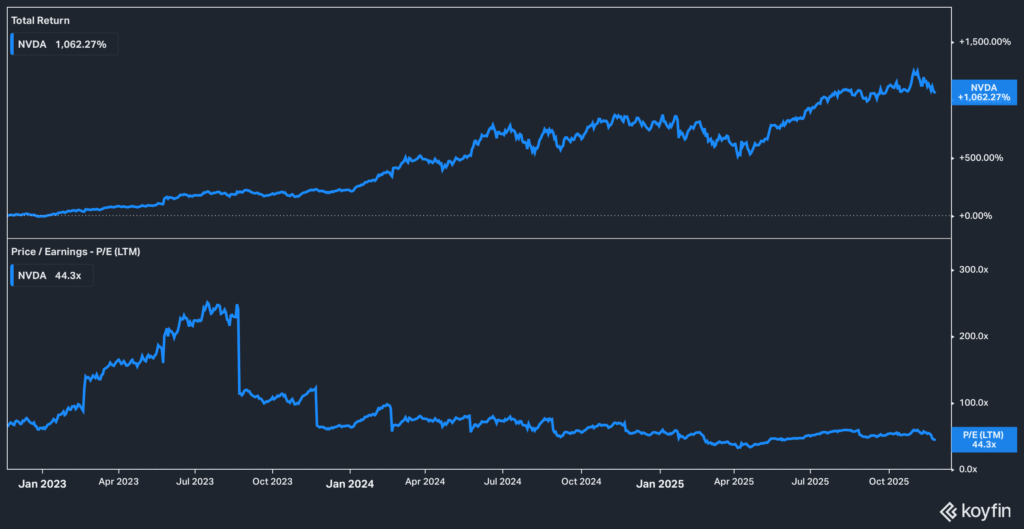
    This Nvidia earnings analysis explains why NVDA delivered one of the strongest mega-cap earnings prints in history and still reversed from a +4% open to finish red after reporting. The answer: positioning, macro, and options flows overwhelmed fundamentals. Let’s break down what really happened.

    Nvidia Earnings Q3 FY2026: The Numbers Were Straight-Up Absurd

    Here are the headline results that fueled the early rally:

    • Revenue: $57.0B vs $54.9B est (+3.9%), +62.5% YoY
    • EPS: $1.30 vs $1.22 est (+6.6%), +60.5% YoY
    • 16 straight quarters beating top and bottom line
    • Margins: 72.4% gross / 60.8% operating — software-level economics on semis
    • Free Cash Flow: now running above $21B per quarter

    A zoomed-out Nvidia earnings analysis shows the transformation is even more dramatic:

    • Revenue per share: 12x in five years
    • Diluted EPS: 24.5x in five years
    • From crypto-winter slump to FCF monster in three years

    This isn’t normal growth. This is the largest AI infrastructure supercycle since the internet buildout—and the data says we’re still early.

    Blackwell Demand = Rocket Fuel for NVDA

    Management’s tone on the call was aggressively bullish, and it’s a critical part of this Nvidia earnings analysis:

    • $500B+ visibility” across Blackwell + Rubin architectures
    • Blackwell Ultra becoming the flagship chip line
    • Supply constraints easing faster than expected
    • Demand expanding beyond hyperscalers into sovereign AI, robotics, enterprise, edge

    Translation: the hockey stick is not bending anytime soon.

    Why Did Nvidia Drop After Earnings? Positioning + Macro Killed the Rally

    The heart of this Nvidia earnings analysis is understanding that fundamentals didn’t cause the selloff—positioning and macro did.

    1. Nvidia is the most crowded trade on Earth

    • Funds, retail, CTAs, vol-control, sovereign wealth funds—everyone is long.
    • When expectations are “beat by $5B or we riot,” a $2.1B beat isn’t enough.
    • The stronger the quarter, the higher the bar becomes.

    2. NVDA has become the market’s liquidity source

    On risk-off days, funds dump their biggest winners first. Nvidia is now the ATM for global markets.

    3. Rates spiked intraday

    The 10-year yield hit 4.45% intraday. When yields rise, long-duration growth gets punished—and Nvidia is the longest-duration asset in the market.

    4. Options flow accelerated the reversal

    • Post-earnings IV crush hit premiums
    • Dealers short gamma needed to sell into strength
    • Classic “squeeze in reverse” setup

    The fade had almost nothing to do with Nvidia itself.

    Nvidia Earnings Analysis: NVDA Is Now a Macro Asset

    A core lesson of this Nvidia earnings analysis: NVDA now trades like a macro product, not a stock.

    • Yields up 5 bps → NVDA down 3–6%
    • Risk-off rotation → NVDA gets hit first, hardest
    • It’s 7%+ of the S&P 500 and ~30% of SOXX

    When Nvidia sneezes, the entire market catches a cold.

    Trading Playbook (Not Financial Advice)

    Long-Term (6–36 months)

    This Nvidia earnings analysis continues to support the structural bull case. If Nvidia grows revenue 50%+, EPS 60%+, and prints $80–100B in annual FCF while maintaining >65% margins, the valuation takes care of itself.

    Near-Term (days/weeks)

    Expect turbulence. Crowding + macro + options flow = 10–15% air pockets with zero warning.

    What actually matters going forward:

    • Any crack in Blackwell demand
    • Gross margins dipping below 70% without clear guidance
    • Hyperscalers cutting AI capex

    Unless one of those breaks, the AI supercycle remains intact.

    Key Takeaways from This Nvidia Earnings Analysis

    • Nvidia delivered one of the greatest earnings prints in mega-cap history.
    • The stock reversal was driven by positioning and macro—not fundamentals.
    • NVDA now trades like a rates + risk sentiment ETF wearing an AI costume.
    • The long-term story is unchanged; short-term volatility just got upgraded.

    We’ll continue updating this Nvidia earnings analysis framework on Trade Desk Daily. Stay nimble, respect the tape, and buy weakness with defined risk.

    For long-term frameworks, see our guide: Long-Term Portfolio Strategy.

    P.S. If you’re still chasing gaps on Nvidia in 2025… good luck. The adults shop the pullbacks.

    Not financial advice, always do your own due diligence, see our full legal disclaimer here -> Legal

  • NFP Report Analysis: What Today’s Jobs Numbers Mean for the Fed and Markets – Nov 20 2025

    NFP Report Analysis: What Today’s Jobs Numbers Mean for the Fed and Markets – Nov 20 2025

    This NFP report analysis breaks down today’s jobs numbers, the unemployment uptick, market volatility, and what this means for the Federal Reserve heading into the December meeting.


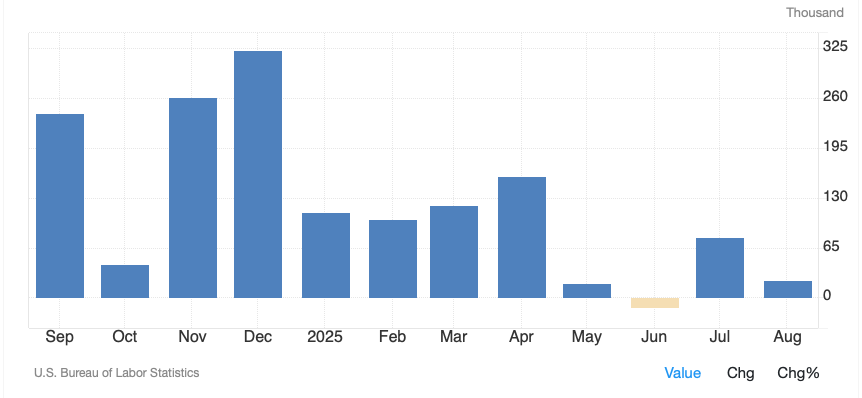
    United States Non Farm Payroll Historical Chart – Koyfin.com

    Report Analysis: Breakdown of Today’s Job Numbers

    On the surface, the September jobs report looked better than feared. After weeks of uncertainty caused by the 43-day government shutdown and the delayed Bureau of Labor Statistics release, traders were braced for a much weaker number. Instead, payrolls rose by 119K vs. roughly 50–60K expected, delivering a headline surprise to the upside.

    Digging deeper into the NFP report analysis, the picture becomes more complicated:

    • Unemployment rate: Rose to 4.4%, the highest level in nearly four years, signaling a softer labor backdrop despite the headline beat.
    • Revisions: Previous months were revised down, including evidence of job losses in August, which means the underlying trend is weaker than the headline suggests.
    • Wages: Average hourly earnings growth remained modest. That helps tamp down inflation fears but also points to limited wage-driven demand.
    • Shutdown distortion: With data collection disrupted, there is lingering uncertainty about how clean and timely this NFP signal really is.

    The takeaway: the labor market is still slowing but not collapsing. This NFP report analysis shows enough resilience to keep a hard-landing scenario at bay, but enough softness to prevent any talk of a renewed overheating cycle.

    United States Unemployment Rate Historical – Koyfin.com


    Report Analysis: How Markets Reacted

    Markets reacted exactly the way you would expect to a noisy but market-moving NFP print. The first move was a classic headline-driven relief rally. A stronger-than-expected jobs number triggered a jump in risk appetite and a pop in yields as traders briefly leaned into a “growth is fine” narrative.

    As the details of the NFP report analysis filtered in, that narrative started to shift:

    • Equities: Index futures ripped higher on the release, but intraday trading turned choppy as traders digested rising unemployment and weak revisions. Rate-sensitive growth names gave back gains once yields pushed higher.
    • Bonds: Treasury yields moved up on the headline strength, then traded in a wide range as the market weighed stronger payrolls against a softer labor trend.
    • FX: The U.S. dollar firmed as rate-cut expectations were pushed out, putting pressure on high-beta currencies and EM FX.

    The message from price action is simple: the data is good enough to delay an immediate pivot, but not strong enough to make anyone comfortable. Volatility around macro events is back, and traders need a clear game plan for the next Fed meeting.


    Fed Watch: December Outlook After the NFP Report

    Before today’s release, markets were already divided on whether the Federal Reserve would cut rates at the December FOMC meeting. This fresh NFP report analysis nudges the Fed outlook in a more cautious direction.

    • Futures markets have reduced the probability of a December rate cut as the stronger headline jobs number gave the Fed cover to stay patient.
    • Rising unemployment and softer revisions will still keep the doves engaged, but they no longer have a clear “emergency” case for an immediate cut.
    • Several large banks have already stepped back from calling for a December cut and are shifting their first-cut expectations into next year.

    Put differently, the Fed has room to say: “The labor market is cooling, but not fast enough to force our hand right now.” Expect December communication to lean heavily on data dependence and the idea that the path to easing is not linear.

    With the October jobs report delayed and the data pipeline still messy, qualitative guidance and speeches may matter almost as much as the remaining hard data. Traders should treat every Fed appearance between now and December as part of the overall NFP report analysis story.


    Report Analysis: Trading Playbook and Market Positioning

    For Trade Desk Daily readers, the goal is not to guess the exact path of policy, but to build a framework that works across plausible scenarios. Here is a practical trading playbook based on today’s NFP report analysis.

    A. Map the Risk Scenarios

    • Scenario 1 – Hold in December: The Fed leaves rates unchanged, acknowledges labor cooling, but signals that cuts are a 2026 story unless data weakens sharply. Yields stay elevated but range-bound, growth and quality tech grind higher, and credit holds up.
    • Scenario 2 – Surprise Cut: A weaker follow-up labor print or a financial-conditions shock forces the Fed to cut. Bonds rally hard, yield curves steepen, and risk assets initially surge but then reprice as growth worries resurface.
    • Scenario 3 – Hawkish Hold: Inflation surprises to the upside and the Fed talks about “not ruling out further hikes.” Long yields jump and rate-sensitive assets sell off aggressively.

    B. Positioning Ideas

    • Stay balanced in duration: With cut odds pushed out but not removed, extreme positions at either end of the curve are risky. A barbelled mix of some front-end exposure and intermediate duration can keep you flexible.
    • Favor quality over junk: Late-cycle NFP dynamics generally reward strong balance sheets and durable cash flows over highly leveraged cyclicals.
    • Use options for convexity: Consider put spreads or call spreads around key indices rather than outright directional bets. The path between now and December is likely to be noisy.
    • Watch cross-asset signals: Equity breadth, credit spreads, and the 2s/10s curve will all help confirm whether this NFP report is the start of a new trend or just another noisy data point.

    None of this is financial advice and is for educational purposes only, but it is a framework for thinking about risk after a big macro event. The goal of this NFP report analysis is to help you stay systematic when markets are anything but. Please review our legal disclaimer here -> Legal


    Key Takeaways for Trade Desk Daily Readers

    To wrap up, here are the main points from today’s NFP report analysis:

    • The headline jobs number beat expectations, but rising unemployment and weak revisions confirm that the labor market is slowing, not collapsing.
    • Market reaction was volatile: initial relief gave way to repricing as traders realized the implications for the Fed and for future growth.
    • The December Fed meeting is now more likely to deliver a hold than an immediate cut, pushing the easing timeline further out.
    • For traders, the environment favors flexibility, quality, and defined-risk structures rather than binary, all-in positions.

    Going forward, Trade Desk Daily will keep updating this NFP report analysis framework as new labor, inflation, and Fed data hit the tape. Use these posts as your daily macro playbook: a simple, practical way to connect the data to actual trading decisions.

    For a longer-term perspective on how to build a resilient portfolio around these late-cycle dynamics, check out our guide: Long-Term Portfolio Strategy.

  • NFP Report Preview: What to Expect From Tomorrow’s Nov 2025 Jobs Data (Market Outlook)

    NFP Report Preview: What to Expect From Tomorrow’s Nov 2025 Jobs Data (Market Outlook)

    Tomorrow’s September 2025 U.S. employment report finally drops at 8:30 a.m. ET on Thursday, November 20th, six weeks late thanks to the 43-day government shutdown. That delay has turned a normally high-impact data point into the key macro event ahead of the December 9–10 FOMC meeting.

    This NFP report preview breaks down what traders need to know ahead of tomorrow’s delayed nonfarm payrolls release. With the labor market cooling and the Fed torn on December rate cuts, this NFP print will shape market sentiment across equities, bonds, and FX.

    For Trade Desk Daily readers, the question is simple:
    Is this still just a slow-bleed cooldown in the labor market, or the front edge of something uglier – and how should traders position around it?


    NFP Report Preview: What Tomorrow’s Jobs Numbers Mean for Markets

    Here’s where consensus and the macro backdrop sit going into the print:

    • Headline NFP (September, released tomorrow): Street looking for roughly 50–60K jobs added, up from +22K in August but miles below the 12-month pre-summer average of ~147K. 
    • Unemployment rate: Expected to hold at 4.3%, already a ~4-year high. 
    • Average hourly earnings: Median call is +0.3% m/m (~3.6–3.7% y/y) – steady wage growth but no sign of a wage-price spiral. 
    • Inflation backdrop: Latest headline CPI at 3.0% y/y (September), with Cleveland Fed nowcasting something just under 3% for Oct/Nov. 
    • Fed policy: Fed funds target range 3.75–4.00%, with markets pricing roughly a coin-flip to modest odds-on for a December rate cut -> FRED Target Range
    • Risk assets: The S&P 500 is grinding around the 6,600s after a tech-led pullback, with dip-buyers re-emerging but breadth still tired.
    • Rates: The 10-year Treasury yield is sitting near 4.1–4.2%, ticking higher this week and flashing some funding stress via elevated repo rate 10 year bond note

    Bottom line: late-cycle vibes – growth slowing, inflation back near 3%, the Fed not quite done fighting, and labor data rolling over but not collapsing.


    Why This Month’s NFP Report Matters More Than Usual

    Normally NFP is just one data point in a steady stream. This one is different for three reasons:

    1. It’s delayed – and the October report is cancelled

    • The 43-day government shutdown froze BLS data collection for key surveys.
    • Result:
      • September jobs report (the one we get tomorrow) was pushed to Nov 20
      • The October report is effectively cancelled – BLS couldn’t run the household survey, so no unemployment rate for that month (odd).
      • November jobs and CPI will likely show up late and scrambled.

    That means tomorrow’s report may be the only clean labor data the Fed has before the December meeting. 

    2. The labor market is already clearly cooling

    • August NFP was just +22K, with downward revisions to prior months – a huge step down from the ~150K pace earlier in the year. Aug Employment Summary
    • Jobless claims and continuing claims have trended higher, with continuing claims around 1.95M by mid-October. 
    • Economists broadly agree: the labor market has shifted from “hot” to “sluggish and fragile” – not yet a full-blown jobs recession, but the risk is rising. ADP Research

    3. The Fed is split – and watching this closely

    • The Fed has already eased from the 5.25–5.50% peak; fed funds are now 3.75–4.00% after cuts in September and October. Fed Prime Rate
    • Fed minutes and commentary show serious division: some officials say inflation is still sticky; others, like Governor Waller, argue the weakening jobs market already justifies another cut in December. 
    • Futures imply ~50–60% odds of another cut at that meeting – not a done deal

    Tomorrow’s print is therefore not just “another NFP”; it’s effectively a live vote on whether the Fed leans dovish or stays cautious into year-end.


    NFP Forecast — What Economists Expect for Payrolls, Wages, and Unemployment

    Growth

    NFP report preview chart showing payroll trends
    • Payroll growth has downshifted from triple-digit monthly gains to something closer to stall speed (20–60K)
    • Business surveys and private payroll trackers show small net job losses in parts of the private sector, with employers slowing hiring but not yet firing aggressively. 

    Think of this as a “grind-down” labor market:

    • Fewer openings, slower hiring, more time on unemployment rolls – but still far from crisis conditions.

    Inflation

    • Headline CPI is running at ~3.0% y/y, with core measures and Fed nowcasts suggesting inflation is hovering just under 3% and no longer in free-fall. 
    • Shelter inflation is moderating, goods inflation is mostly tamed, but services and wages keep the floor under 2%Bureau of Labor Statistics

    So inflation is “good enough to cut if growth really rolls over, but not low enough to ignore.” That’s why this jobs report matters so much.

    Financial conditions

    • Equities: The Nasdaq and S&P 500 have bounced today after a multi-day slide, helped by big tech and Nvidia-related optimism, but breadth is weak and new lows still outnumber new highs for many stocks. 
    • Rates & funding: The 10-year yield at ~4.1% plus elevated repo rates signal tight year-end funding even after Fed cuts.
    • Risk sentiment: Crypto and more speculative assets have sold off sharply on fading rate-cut hopes, a sign that the “easy liquidity” trade is off autopilot.

    Net-net, the market is in “nervous, late-cycle risk-on” mode: still buying dips, but increasingly sensitive to bad macro surprises.


    Key Numbers Traders Should Watch in the NFP Report

    For traders on Trade Desk Daily, here’s the practical checklist for tomorrow’s print:

    1. Headline Nonfarm Payrolls (NFP)
      • Consensus: ~50–60K.
      • Lens:
        • Below 0K: recession alarm bells – markets will question whether the Fed is behind the curve.
        • 0–25K: confirms a very weak labor market; bullish for bonds, likely negative for cyclicals and credit.
        • 25–75K (consensus-ish): keeps the “slowdown, not collapse” narrative alive.
        • >100K: suggests more resilience; risk that the market starts pricing fewer cuts.
    2. Unemployment Rate (U-3)
      • Consensus: 4.3%, matching August. 
      • Watch:
        • A move to 4.4%+ would reinforce the “weak labor” camp at the Fed.
        • A drop back toward 4.1–4.2% would be a genuine surprise and could stiffen the Fed’s spine against December easing.
    3. Average Hourly Earnings
      • Consensus: +0.3% m/m (~3.7% y/y).
      • Key:
        • 0.1–0.2% m/m: the Fed gets comfort that wage pressure is fading.
        • 0.4%+ m/m: raises questions about sticky services inflation and could offset a weak headline NFP.
    4. Revisions
      • August and June/July have already seen downward revisions. If BLS cuts prior months again, the trend looks worse than markets currently price.

    Market Scenarios Based on Tomorrow’s NFP Report

    (Nothing here is advice, just a trading framework. Disclaimer -> Here)

    Scenario 1: “Goldilocks Weak” – Near Consensus, Slightly Soft

    • Data: NFP 30–60K, unemployment at 4.3%, wages +0.3% or slightly lower, minor negative revisions.
    • Narrative: Labor market is cooling, not collapsing; Fed gets cover for a single quarter-point cut in December, not a full easing cycle.
    • Likely reactions:
      • Equities: Relief bid. Growth and quality tech outperform; cyclicals lag but don’t collapse.
      • Rates: 10Y yields drift lower (bullish Treasuries), curve flattens modestly as front-end rallies on cut expectations.
      • Dollar: Mixed to slightly weaker vs. high-beta FX as “soft landing” odds rise.

    Trading angle:

    • For futures traders, this favors long ES/NQ on dips with tight risk, and long TY/ZN against a defined stop if yields spike intraday first.
    • Options traders might look at selling post-event vol if the reaction is controlled and the data sits in this middle band.

    Scenario 2: “Bad Weak” – Clear Deterioration

    • Data: NFP <25K or negative, unemployment 4.4%+, prior months revised down, wages sub-0.2%.
    • Narrative: Labor market has moved from “cooling” to soft or outright recessionary, especially given the shutdown hit.
    • Likely reactions:
      • Equities:
        • First move could be risk-off in cyclicals, small caps, and credit-sensitive names.
        • Mega-cap “quality” may initially outperform but will struggle if recession odds spike.
      • Rates:
        • Front-end rips higher (2Y yields down hard) as markets price multiple cuts.
        • Curve steepens (bull steepener) as growth fears pull long yields lower.
      • Dollar:
        • Could sell off vs. safe havens (JPY, CHF) but might hold up vs. high-beta EM depending on risk sentiment.

    Trading angle:

    • Bond futures (ZN, ZB) and rate-cut trades (SOFR/FF futures) likely see the cleanest trend.
    • In equities, put spreads on cyclical sectors or long volatility structures can benefit if the market shifts from “dip-buying” to “de-risking.”

    Scenario 3: “Too Hot” – Upside Surprise

    • Data: NFP >100K with unemployment stable or lower, wages 0.3–0.4%+, revisions flat or higher.
    • Narrative: The slowdown has been overstated; labor market still grinding forward, AI and tariffs haven’t broken the jobs engine yet.
    • Likely reactions:
      • Equities:
        • Knee-jerk: risk-off in duration-sensitive sectors (growth tech, long-duration stories) as yields pop.
        • Later: rotation into cyclicals if growth story takes over from the “rates” story.
      • Rates:
        • 10Y and 2Y yields jump, December cut odds fall sharply; curve may flatten as the front-end reprices.
      • Dollar:
        • Stronger USD vs. most majors on higher-for-longer Fed expectations.

    Trading angle:

    • Short-duration trades (short TY, 2Y futures) and tactical USD longs tend to be the clean expression.
    • In equities, think relative trades (cyclicals vs. growth, financials vs. long-duration tech) rather than outright index shorts unless the move is truly extreme.

    How This Fits Broader Market Playbook

    For Trade Desk Daily’s strategy of practical, repeatable frameworks:

    1. Treat this NFP as a regime check, not a one-off print.
      • You’re asking: Is the U.S. still in a soft-landing lane, or has the slowdown tipped toward recession?
      • The combination of headline NFP trend + unemployment level + wage growth is your regime signal.
    2. Anchor it to your existing breadth/technical work.
      • We’ve already looked at things like % of S&P 500 above the 200-day in prior posts. Combine that with tomorrow’s macro:
        • Weak breadth + weak jobs = respect downside risk.
        • Strong breadth + Goldilocks jobs = lean into dip-buying with tighter risk controls.
    3. Focus on relative trades over hero calls.
      • Late cycle with 3% inflation and a divided Fed rarely rewards max-conviction, one-direction bets.
      • Think relative value:
        • Quality vs. junk
        • Large cap vs. small cap
        • Front-end vs. long-end of the curve
        • Developed FX vs. high-beta EM
    4. Have a vol plan going in.
      • If you’re an options/futures trader, decide before the number:
        • Are you harvesting event vol (selling options or spreads), or
        • Are you owning convexity because you think this is the moment the regime breaks?

  • Trump 50-Year Mortgage Proposal: Breaking Analysis, Amortization Impact, and SPY/Bitcoin Comparison

    Trump 50-Year Mortgage Proposal: Breaking Analysis, Amortization Impact, and SPY/Bitcoin Comparison

    Trump’s 50-year Mortgage

    The Trump 50-year mortgage proposal is quickly becoming one of the most controversial housing ideas in years — and for good reason. While the plan promises lower monthly payments for millions of Americans, the long-term financial math reveals a very different story. And when you break down the amortization schedule, compare interest costs, and model what happens if homeowners invest the payment savings into SPY or Bitcoin, the real implications become even more dramatic.

    In this deep-dive analysis, we reveal exactly what a 50-year mortgage means for your wallet, your equity, and your long-term wealth — adjusted for inflation and paired with realistic investment scenarios.


    What Is the Trump 50-Year Mortgage Proposal?

    Donald Trump has proposed expanding mortgage products to include 50-year fixed-rate loans, arguing that longer loan terms would make housing more affordable by reducing monthly payments. Supporters say this helps first-time buyers; critics say it simply reduces equity and increases long-term interest burden.

    Experts from Politico, AP News, and CBS News have voiced concerns that the plan acts more like a “band-aid” than a true affordability solution — doing nothing to fix structural issues like high rates, low housing inventory, and rising construction costs.

    Newsweek thinks long duration options will be a hit with millennials -> Trump’s 50-Year Mortgages Could Be a Big Winner With Millennials


    How a Trump 50-Year Mortgage Changes Amortization

    Let’s compare the numbers using a standard scenario:

    • Home price: $400,000
    • Down payment: 10%
    • Loan amount: $360,000
    • Interest rate: 6.25% fixed
    • Loans compared: 30-year vs 50-year

    Payment Comparison

    Loan TypeMonthly PaymentTotal Interest PaidLoan End Year
    30-year$2,216.58$437,969Year 30
    50-year$1,961.90$817,141Year 50

    Savings: 50-year cuts payment by $254.68/month
    Cost: Adds ~$379,000 more interest over the life of the loan


    Equity Growth: 30-Year vs 50-Year After 10, 20, and 30 Years

    Year30-Year Balance50-Year BalanceDifference
    10$303,256$345,564+$42k owed
    20$197,415$318,637+$121k owed
    30$0 (paid off)$268,412+$268k owed

    Even after 30 years, the 50-year borrower still owes $268k on the original $360k loan.

    Inflation-adjusted (2.5%):
    → That 30-year remaining balance still equals $128k in today’s dollars.


    What If You Invest the 50-Year Savings Into SPY or Bitcoin?

    The biggest question surrounding the Trump 50-year mortgage proposal is:

    Does investing the lower payment savings beat paying down the mortgage?

    You save $254.68/month with the 50-year loan.

    Let’s model investing that instead:

    Investment Assumptions (Inflation Adjusted)

    • SPY real return: 5.4%
    • Bitcoin real return: 12.2% (Hypothetical)
    • Time horizon: 30 years
    • Monthly investment: $254.68

    Investment Results (30-Year Horizon)

    StrategyReal ReturnValue After 30 Years
    SPY (S&P 500)5.4% real$221,547
    Bitcoin12.2% real$807,925

    Now subtract the real mortgage balance remaining after 30 years:

    StrategyInvestment ValueRemaining Mortgage (Real)Net Wealth
    SPY~$221,547-$128,000+94k
    Bitcoin~$807,925-$128,000+680k

    SPY beats doing nothing
    Bitcoin dominates under optimistic hypothetical assumptions

    But remember — Bitcoin is extremely volatile; this is purely mathematical, not predictive!


    What If You Keep the 30-Year Mortgage and Pay an Extra $255?

    If you take the 30-year mortgage and apply the same extra $255/month:

    • Mortgage is paid off in 22.8 years
    • Interest savings: ~$121,600
    • You get 7+ years with no mortgage payments
    • That frees $2,216/month to invest in SPY or BTC

    Over 7 years, investing $2,216/month at 5.4% real yields:
    → ~$207,000 real

    This makes the 30-year+extra principal strategy a strong middle path.


    Trump 50-Year Mortgage: Pros and Cons

    Pros

    • Lower monthly payment
    • Easier loan qualification
    • Improved cash flow for younger buyers

    Cons

    • Much slower equity growth
    • Significantly more interest
    • Higher long-term financial risk
    • Dependence on borrower discipline (to invest the savings)

    Does a Trump 50-Year Mortgage Make Sense?

    Here’s the bare truth:

    If you:
    ✔ are extremely disciplined
    ✔ invest the savings every month
    ✔ stick to the plan for decades

    Then a 50-year mortgage + aggressive investing can outperform a traditional mortgage.

    But for most households?

    The 50-year mortgage just means:

    • Less equity
    • More lifetime interest (profit for big banks)
    • A mortgage deeper into your 70s

    It’s a trade-off between cash flow now and financial security later.

    Check out our view on long term investing here -> Build a Long Term Portfolio

  • Is the Fed’s December Rate Cut Still on the Table? What Traders Need to Know

    The Federal Reserve’s December 9–10, 2025 meeting has shifted from a near-lock for another rate cut to one of the most uncertain policy decisions of the year. After cutting rates twice—in September and October—the Fed now faces intense internal division over whether to deliver a third consecutive cut or pause to reassess inflation pressures.

    This uncertainty has created elevated volatility across rate-sensitive sectors, with futures markets now pricing the December meeting as a true 50-50 coin flip.


    December Rate Cut Odds Collapse From 90% to 50%

    According to the CME FedWatch Tool, the probability of a December cut has plunged from over 90% last month to roughly 50–55% today, marking one of the steepest shifts in rate expectations in recent years.

    Current futures pricing suggests:

    • ~60% probability the Fed holds rates at 3.75%–4.00%
    • ~40% probability of a 25 bps cut to 3.50%–3.75%

    This swing reflects growing disagreement inside the Fed, conflicting economic data, and unusually limited visibility into Q4 conditions due to the government data blackout.

    🔗 Track real-time probabilities: CME Fed Watch Tool


    What Changed? Powell’s Tone Turned Cautious

    Fed Chair Jerome Powell surprised markets at the October 29 press conference, warning that a December rate cut is “not a foregone conclusion” and revealing “strongly differing views” within the FOMC.

    This is a stark shift from the September guidance, which projected three total cuts for 2025.

    Powell emphasized:

    • A growing group of Fed officials want to “wait a cycle
    • The committee is split on inflation risk
    • There is no consensus on whether additional cuts are appropriate

    This level of public division is highly unusual for the historically consensus-driven Fed.


    Inflation Is the Biggest Obstacle to a December Cut

    Despite progress in the past year, inflation remains above the Fed’s 2% target, and several components are re-accelerating.

    Recent data shows:

    • Core PCE: 2.7% YoY
    • Electricity & health care costs: rising
    • Insurance premiums: climbing
    • Tariff-related inflation: feeding into broader categories

    Kansas City Fed President Jeff Schmid, who dissented in October, warned that cutting again risks “cementing higher inflation” at a time when businesses continue reporting persistent price pressures.

    His message: inflation is not fully under control.


    Softening Labor Market Complicates the Decision

    While inflation pressures persist, the labor market is sending the opposite signal.

    Recent trends include:

    • Slowing job gains throughout 2025
    • Unemployment rate ticking higher
    • Increase in initial jobless claims
    • Rising corporate layoff announcements
    • Weak small-business hiring plans

    This puts the Fed in a difficult position:
    Should it support employment with another cut — or defend the inflation target by holding steady?


    Fed Division Reaches a Rare Peak

    The October meeting featured an unusual split:

    • Governor Stephen Miran wanted a 50 bps cut (more aggressive easing)
    • President Jeff Schmid wanted no cut (inflation concerns)

    Powell confirmed the committee is deeply divided on the December path. Such open disagreement is rare and signals a highly uncertain policy environment.


    Data Blackout Adds Major Uncertainty

    The federal government shutdown has created a data gap not seen in modern rate-setting history.

    Key data releases were halted, meaning:

    • The Fed has less visibility into Q4 trends
    • Some October data may never be released
    • Policymakers are relying on private sector data and anecdotes

    This raises the risk that the Fed could misread the economy, making officials more cautious about cutting too aggressively.


    What This Means for Markets and Traders

    Rate-sensitive sectors have already reacted:

    Sectors Under Pressure

    • REITs: down 2–4% since late October
    • Small-cap stocks lagging
    • Utilities underperforming

    Sectors Benefiting

    • Banks & financials (improved NIM)
    • Money market funds (5%+ yields)
    • U.S. dollar strengthening

    Treasury Market Reaction

    • 10-year yields holding near 4.09%
    • Yield curve pricing fewer 2026 cuts
    • Terminal rate expectations shifting higher

    Markets are effectively pre-positioning for either outcome.


    December Rate Decision: Likely Scenarios

    Scenario 1: 25 bps Cut (45–50% probability)

    Would require:

    • Weak November jobs report
    • Inflation showing clear deceleration

    Market reaction:

    • Growth stocks rally
    • REITs bounce
    • Dollar weakens
    • Long-duration assets outperform

    Scenario 2: Hold Rates Steady (50–55% probability)

    Would align with current Fed messaging.

    Market reaction:

    • Initial equity pullback
    • Financials outperform
    • Short-term yields rise
    • Dollar strengthens

    Scenario 3: Hawkish Hold (Low probability)

    Would signal an extended pause into Q1 2026.

    Market reaction:

    • Sharp market correction
    • Strong dollar
    • More volatility into year-end

    Key Data to Watch Before the December Meeting

    1. November Jobs Report (Dec 6)

    Consensus: 180K jobs
    Impact:

    • Below 150K → strengthens case for a cut
    • Above 200K → likely eliminates December cut

    2. November CPI (Dec 11)

    After the meeting — affects January path.

    3. Fedspeak before blackout (through Dec 6)

    Any hawkish or dovish tone shift may move markets.


    Looking Ahead to 2026

    Even if the Fed cuts in December, most major institutions expect a slower easing cycle next year.

    • Goldman Sachs: Two cuts (Mar + Jun 2026)
    • BlackRock: Fed funds at 3.4% by end of 2026
    • Morgan Stanley: Q1 2026 pause likely

    The Fed’s decision to end QT on December 1 effectively adds extra liquidity — a subtle easing measure regardless of the rate outcome.


    The Bottom Line

    The December Fed meeting has evolved into one of the most uncertain policy decisions of the year. Inflation remains sticky, the labor market is softening, and internal Fed disagreement is unusually high.

    For traders, this environment creates significant opportunity — but also elevated risk.

    What to Do Now

    • Monitor CME FedWatch Tool daily
    • Track November jobs data (Dec 6)
    • Prepare for rate-sensitive sector volatility
    • Consider hedging ahead of the announcement
    • Expect sharp moves on December 10 regardless of outcome

    The Fed’s December decision will shape the market’s trajectory into 2026 — and with the FOMC more divided than ever, the path forward is anything but certain.

    Track probabilities in real-time: CME FedWatch Tool